The newsletter is due.
The list lives in three CSVs.
Staffing marketing serves two audiences at once, a fact most tools ignore. Client marketing wins job orders: newsletters, dormant-account nurture, webinars, proof. Recruitment marketing attracts candidates: job ads, talent-pool emails, Google Jobs, employer brand, review management. Two funnels, one calendar, and a stack of tools that don’t share a database.
In most 10 to 30 person agencies this is one person. Either way, the tooling bill is sized for a department, priced per function, not per user.
Two funnels, six frictions, zero shared data.
Two audiences, one afternoon
Client campaigns and candidate campaigns compete for the same block of time, in different tools with different logins. Whichever audience loses this week goes quiet, and quiet audiences stop producing orders and applicants.
The three-CSV newsletter
The client list is exported from the CRM, the candidate list from the ATS, the extras from a spreadsheet. By the time they’re deduped and uploaded to Mailchimp, they’re already stale, and every unsubscribe syncs back to nothing.
Dormant clients nobody nurtures
Accounts stop sending orders and nobody notices for a year, because no tool is watching. Reactivated clients are the cheapest revenue in staffing, and the list already exists, unread, in your CRM.
Job ads shouting into the void
Money goes to boards and ads, applications come in somewhere, and nobody can say which channel produced which hire. Cost per application is a shrug, so the budget gets set by habit instead of data.
Employer brand by accident
Google reviews accumulate unmanaged, testimonials never get collected, and the one unhappy contractor outranks fifty happy ones. Your rating is deciding candidate clicks whether you track it or not.
“What does marketing actually do?”
With no line from campaign to job order, marketing gets measured on activity instead of revenue, and defended in every budget conversation. The missing number is marketing-sourced pipeline, and the stack can’t produce it.
A four-figure bill for one hat.
Marketing stacks are priced per function, not per user, which is why a one-person function can carry this. All prices est., current list.
The marketing function today
Before website hosting and any paid ads.
The same jobs, on Zoho
Synced live to the same database Sales and Delivery run on. Annual pricing, USD list.
Both funnels, one database, live-synced.
Not a diagram. The actual product. Zoho Campaigns sends to lists synced live from CRM accounts and Recruit talent pools, so the client newsletter and the hot-jobs email draw from the same database your whole agency works in.

The cheapest revenue is already in your CRM.
That’s Zoho CRM and Campaigns running dormant-client reactivation, the flagship here. The list already exists in your database; the nurture just refuses to forget it.
Talent pools that warm themselves
Recruit talent pools sync to Campaigns → a monthly hot-jobs email goes to each pool → opens and clicks write back to the candidate record, so recruiters call warm candidates first.
Placements that generate proof
Every placement fires an automated Google-review request to client and candidate → responses feed a testimonial pipeline. Review rating becomes a tracked KPI, not an accident.
High-intent candidates surfaced, not buried
Career-site visitors are tracked and scored → repeat visitors to a specific job family get flagged to the recruiter who owns that desk, while the interest is live.

Two audiences. One database.
Zero CSV exports.
What one person actually gets done.

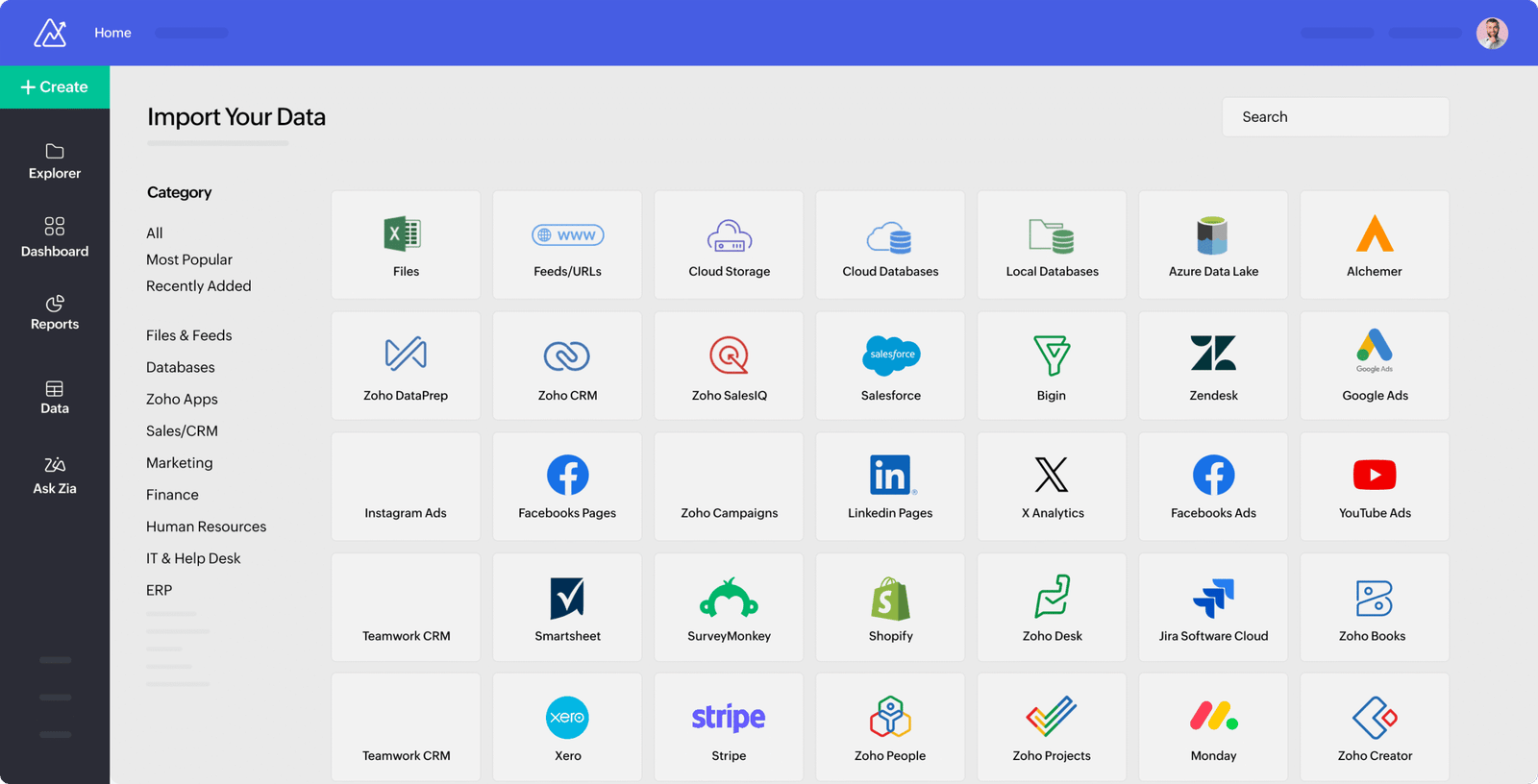
The hot-jobs emails go out by pool
Each Recruit talent pool gets its monthly roles email from Campaigns. No exports, no uploads, lists live-synced. By noon, every open and click has written back to its candidate record, and recruiters are calling the warm ones first.
A week of social, queued in one sitting
Zoho Social schedules the LinkedIn, Facebook and X calendar: placements-made posts, hiring-market notes, the webinar promo, while Canva handles the graphics. One calendar for both audiences instead of two tools fighting for the same afternoon.
A dormant client wakes up
A reply lands from the overnight reactivation nurture: “we do have two openings.” The task is already on the account manager’s list, the thread is on the account record, and by week’s end there are two new job orders marketing can point to by name.
The budget meeting has receipts
The Analytics dashboard shows cost per application by channel, career-site conversion, and the marketing-sourced revenue card. The job boards that produce get more budget; the ones that shout into the void get cut. Data closes the conversation.
The apps this team lives in, and what each one does here.
The workflow comes first. These are the apps we wire around it. Not a feature list: the jobs each app does for staffing marketing, both funnels, specifically.
Zoho Campaigns
- Client newsletter pulled live from CRM accounts, no CSV uploads
- Monthly hot-jobs email per Recruit talent pool
- Dormant-client reactivation sequences that run overnight
- Every open, click and unsubscribe written back to the source record
Zoho Marketing Automation
- Nurture journeys for hiring managers from first touch to first order
- Lead scoring that separates a browsing student from a buying VP
- Web tracking that flags repeat visits to your services pages
- Candidate drip journeys per job family
Zoho Social
- One calendar for client posts and candidate posts
- Placements-made and hiring-market posts queued in one sitting
- LinkedIn, Facebook and X publishing with per-channel stats
Zoho LandingPage
- Niche talent pages per skill set: travel nurses, CNC machinists, cleared engineers
- Campaign pages for webinars and salary-guide downloads
- Forms that write straight into CRM and Recruit
Zoho Sites
- The agency site itself, on the same login as everything else
- Vertical microsites for your biggest desks
- Blog and resources feeding the nurture journeys
Zoho Survey
- Client NPS after every filled order, written to the account
- Candidate experience surveys after placement and after week one
- Testimonial capture that feeds the proof pipeline
Zoho PageSense
- A/B tests on career-site apply flows
- Heatmaps showing where candidates stall before applying
- Funnel reports that turn visit-to-application into a tuned number
Zoho SalesIQ
- One inbox for website chat, from hiring managers and candidates alike
- Zobot answering rate and role questions after hours
- Visitor scoring shared with Sales, so hot accounts get called
Zoho Analytics
- Cost per application by channel, the budget-setting chart
- Career-site funnel from visit to application to hire
- Marketing-sourced job orders and revenue, tracked by name
- List growth and reactivation trend lines
Measurable pipeline, both sides.
Zoho Analytics presents this function as channel-attribution stacked bars, a career-site funnel, a list-growth trend line and a marketing-sourced-revenue KPI card, the number that ends the “what does marketing actually do” conversation. Live, no exports.
Illustrative view of the numbers on it:
cost per application, split by channel. The budget-setting number
career-site visit-to-application conversion, tuned with PageSense
job orders sourced by marketing this month, tracked by name
email open rate, split client vs candidate audience
database growth this quarter, with dormant-client reactivations beside it
Google review rating, fed by the placement-proof automation
Every tool, mapped honestly.
The short version, Canva included.
| You’re paying for | Zoho One does it with |
|---|---|
| Mailchimp | Zoho Campaigns, synced live to CRM and Recruit. No CSV exports, ever. ✓ |
| HubSpot Marketing Hub | Zoho Marketing Automation. Thinner template library than HubSpot; the mechanics are all there. |
| Hootsuite | Zoho Social. Solid scheduling; lighter on social listening than Sprout-class tools. |
| Unbounce | Zoho LandingPage + Zoho Sites. ✓ |
| Canva | Canva stays. Zoho has no design tool. Concede the ~$13/user and move on. |
| Survey tools | Zoho Survey. ✓ |
| A/B testing and heatmaps | Zoho PageSense. ✓ |
One note for the quote: Zoho Recruit’s Staffing Agency edition, the career site and talent pools your recruitment marketing feeds, is a separate purchase, not part of Zoho One. We show it as its own line, always.
The first 30 days in this function.
Week 1: one database, deduped once, forever
We audit both funnels, sync Campaigns live to CRM accounts and Recruit talent pools, and retire the three CSVs. From here on, lists maintain themselves.
Weeks 2 and 3: the nurtures switch on
The dormant-client reactivation, the monthly hot-jobs emails per pool and the placement review-request automation go live, the Social calendar is queued, and the first niche landing pages ship.
Week 4: attribution ends the debate
The Analytics dashboard goes live: cost per application by channel, career-site funnel, list growth and the marketing-sourced revenue card. The next budget conversation runs on data.
Marketing is the hat you wear when the calls are done.
A four-figure monthly stack for an end-of-week hat never made sense. On Zoho One the whole marketing toolkit, email, journeys, social, landing pages, surveys, A/B testing, sits inside the same $37 per-employee login that runs your sales hat, your recruiting hat and your books. The nurtures keep working all week, when the hat is off.
What marketers ask us.
Do we lose Canva?
No. Zoho has no design tool, and we would rather concede the ~$13/user than pretend otherwise. Canva stays; everything it produces publishes through Zoho Social and Campaigns.
Is Zoho Marketing Automation really a HubSpot replacement?
The mechanics, journeys, lead scoring and web tracking, are all there, on your own data. The template library and community are thinner than HubSpot’s. For a staffing agency’s volume, that trade against ~$800/mo is rarely close.
Where do the talent pools come from?
From Zoho Recruit’s Staffing Agency edition, the same database Delivery works. It is a separate purchase from Zoho One, and it is what makes recruitment marketing write back to candidate records instead of a disconnected list.
Will Campaigns handle our list size?
Campaigns is priced by contact tier, and overages can appear at very large list sizes. We size your lists against the tiers before you buy. The fine print goes in the quote, not in a surprise invoice.
What happens to our job-board and ad spend?
It survives any platform. Paid media is paid media. What changes is attribution: every application is tracked to its channel, so cost per application finally decides the budget instead of habit.
Can one person actually run all of this?
That is the design goal. The journeys you design and approve keep working all week; the marketing hat becomes planning and creative instead of exports and uploads.
Marketing looks different by industry.
We’ll walk both funnels,
client and candidate.
A Staffing Systems Review is a business conversation with people who have run recruiting businesses, 30+ years in recruitment and 14+ recruiting firms behind them. You’ll see what a single-database marketing engine looks like on your own data, and you leave with a gap map of your systems either way.
Book a Staffing Systems Review