Tomorrow’s start needs eleven signed documents.
You have four.
This is your middle office, everything between the placement and the paycheck. Onboarding packets, I-9 and E-Verify, background checks and drug screens, credential and licence tracking with expiry dates, client MSAs, COI tracking, and the weekly heartbeat of every temp agency: the timesheet chase.
Nobody starts an agency to do this work, which is exactly why it’s the most automatable department in the building.
Six frictions the middle office absorbs daily.
The late-night packet
Offer, W-4, direct deposit, handbook, client addenda. Eleven documents, five tools, one start date that slips if any single signature is missing. The paperwork, not the client, decides when people start.
Credential roulette
Licences and certifications live in a spreadsheet with expiry dates nobody opens until an audit, or an incident. One lapsed credential on a client site is a liability conversation you never want to have.
The timesheet phone-around
The end of the week is spent calling non-submitters. The start of the next is spent panicking about the ones who never answered, while payroll and the client invoice both wait on the same missing hours.
Per-start toll booths
Onboarding platforms charge $2 to $5+ per onboard, background checks run $30 to $80 each. Fees that scale with your success, forever, on top of the subscriptions that were supposed to contain them.
The incomplete client file
Workers get staffed against accounts that are missing a COI, a PO or a signed rate card. Everyone means to fix it later; later arrives as a payment dispute or an uninsured incident.
Zapier duct tape
The automations that hold it all together live in a tool only one person understands, burning task quotas on every run. When that person leaves, or the plan limit hits mid-month, the middle office goes manual overnight.
A stack that accreted, fee by fee.
An e-sign tool here, a Zapier plan there, a checklist app, plus per-transaction fees on every single start. All prices est., current list.
The middle office today
Plus per-onboard and per-check fees on every start, forever.
The same jobs, on Zoho
Workerly is its own per-temp line item on top of Zoho One, shown separately in every quote. Annual pricing, USD list.
Eleven documents. One envelope. Same-day start.
Not a diagram. The actual product. Zoho Sign assembles the whole onboarding packet into one envelope, tracks every signature, and files the signed set automatically, with SignForms embedded right inside Recruit and Workerly.
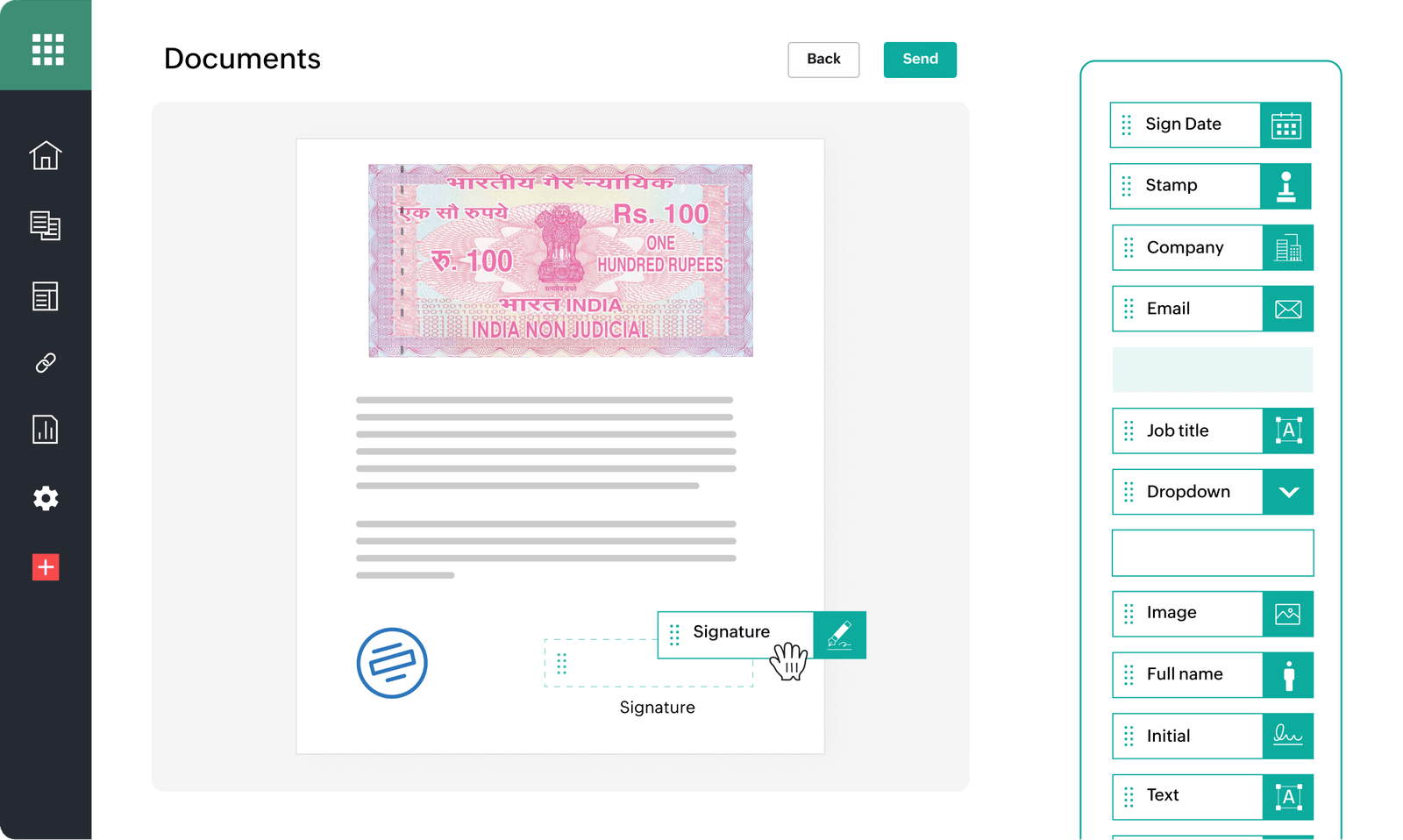
Three days of paperwork. Same-day start.
That’s the flagship here: the one-click onboarding packet, assembled by Zoho Flow the moment you mark the hire. Each signed document ticks the checklist, and the paperwork stops deciding the start date.
The credential-expiry engine
A Creator app tracks every licence and certification → auto-emails the worker to renew at 60, 30 and 7 days → holds scheduling in Workerly if a credential lapses. Compliance stops depending on someone remembering.
The timesheet chase, retired
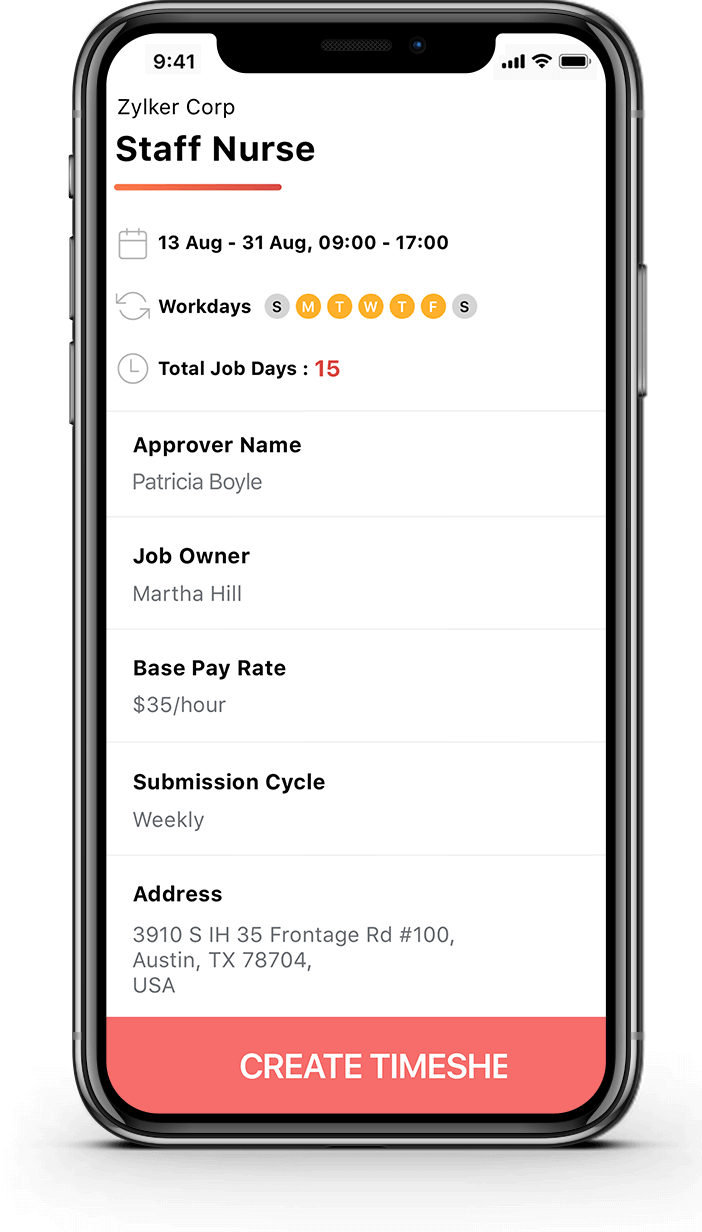
Auto-reminders go to every non-submitter before the weekend, escalation to the recruiter follows first thing after it, and client approval links go out automatically. The weekly phone-around disappears from the calendar.
New client, complete file
The moment an MSA is signed, a COI, PO and rate-card checklist auto-spawns against the account. Nothing gets staffed against a client with missing paperwork. The system simply will not let it happen quietly.
Compliance stops depending on
someone remembering.
The week, when the chase comes off your calendar.

Payroll opens to a green board
The timesheet-status board in Analytics is already green: reminders went out before the weekend, escalations fired first thing after it, client approval links did the collecting. The payroll run starts on time because nobody spent the weekend chasing hours.
A hire becomes a same-day start
Delivery marks the candidate hired, Flow assembles the Sign envelope, offer, W-4, direct deposit, handbook, client addenda, the signed set auto-files to the worker’s WorkDrive vault, and the checklist ticks as each signature lands. Three days of paperwork, done before lunch.
The expiry engine does its rounds
The Creator app emails every worker whose licence hits the 60, 30 or 7-day window, sets scheduling holds on the lapsed ones, and updates the compliance heat-map. The audit-day panic is replaced by a report that was ready all along.
A new client signs. The checklist is already open
The MSA comes back through Sign and the COI, PO and rate-card checklist spawns against the account before anyone asks. The week ends with zero incomplete files, zero unsigned packets and an evening that belongs to you, not the late-night hat.
The apps this team lives in, and what each one does here.
The workflow comes first. These are the apps we wire around it. Not a feature list: the jobs each app does in a staffing middle office, specifically.
Zoho Sign
- The full onboarding packet as one envelope, one send
- Client MSAs and rate-card amendments with per-signer tracking
- Bulk send for policy updates across the whole workforce
- SignForms embedded inside Recruit and Workerly, no app-switching
Zoho Flow
- Hired-to-packet automation that makes same-day starts routine
- Timesheet reminder and escalation chains, no task quotas burned
- New-client file checklists spawned on every signed MSA
- Background-check status synced from Checkr to the candidate record
Zoho Creator
- Credential and licence tracker with 60, 30 and 7-day renewal alerts
- Scheduling holds in Workerly when a credential lapses
- COI and insurance registers per client account
- Audit logs that make client and regulator reviews a search, not a scramble
Zoho Forms
- Onboarding data capture: banking, emergency contacts, tax details
- Site-specific safety acknowledgements per client
- Incident reports filed from a phone, routed to the right owner
Zoho WorkDrive
- One document vault per worker, filed automatically by the packet flow
- Client folders holding MSAs, COIs, POs and rate cards
- Access controls so auditors see exactly what they need, nothing else
Zoho Projects
- Onboarding checklists attached to the records they govern
- Ops runbooks with owners and due dates, not tribal memory
- Client implementation plans for new MSP programs
Zoho Workerly
- Mobile clock-in e-timesheets from every client site
- Client approval portal that collects sign-off without calls
- Scheduling that respects credential holds automatically
- Approved hours flowing straight to invoicing in Books
Zoho Vault
- Shared logins for job boards and client VMS portals, out of the spreadsheet
- Access revoked the day someone leaves
- An audit trail of who used which credential, when
Zoho Analytics
- Compliance heat-map by client and worker
- Onboarding cycle-time trend, offer to first day
- Live timesheet-status board the payroll run depends on
Proof, on one screen.
Zoho Analytics presents this department as a compliance heat-map by client and worker, an onboarding cycle-time trend, and the live timesheet-status board your payroll run depends on. Clients increasingly ask for exactly this proof.

Illustrative view of the numbers on the board:
time-to-start, offer accepted to first day on site
onboarding packets completed before day one
I-9s completed within 3 days of start
credential currency. The heat-map stays green
timesheets submitted on time, without a phone call, approval cycle time beside it
audit findings left open, tracked from found to closed
Every tool, mapped honestly.
The short version, including the check vendors that stay.
| You’re paying for | Zoho One does it with |
|---|---|
| DocuSign | Zoho Sign. Parity for standard staffing paperwork. ✓ |
| Zapier | Zoho Flow. Native Zoho-to-Zoho triggers burn no task quotas. ✓ |
| Process Street / Asana | Zoho Projects + Zoho Tables. ✓ |
| Credentialing spreadsheets / niche vendors | Zoho Creator. Healthcare-grade primary-source verification pairs a Creator build with a niche vendor. |
| Sterling / Checkr | Keep them. Checkr runs natively inside Recruit; per-check fees survive either way. |
| Document collection and storage | Zoho Forms + WorkDrive. ✓ |
| Timesheet collection | Zoho Workerly. Its own per-temp line item. |
| Shared logins for boards and client VMS | Zoho Vault. ✓ |
The first 30 days in the middle office.
Week 1: the packet, assembled once
We audit your onboarding checklist and credential spreadsheet, build the Sign templates, offer, W-4, direct deposit, handbook, client addenda, and wire the one-click packet with WorkDrive vaults per worker.
Weeks 2 and 3: the chase goes automatic
The Creator credential tracker goes live with 60, 30 and 7-day alerts and scheduling holds, Workerly timesheets replace the paper and the phone-around, and the new-client file checklist starts spawning on every signed MSA.
Week 4: proof on one screen
The compliance heat-map, onboarding cycle-time trend and live timesheet board go live in Analytics. The same screens your clients increasingly ask to see, ready before they ask.
This is the hat that gets worn after dinner.
In a small shop there is no ops department. There is the owner, late in the evening, chasing signatures for tomorrow’s start. That is exactly why this page’s automations buy back the most evenings at your size. On Zoho One, the entire middle-office toolkit lives inside the same $37 per-employee login that runs your sales, recruiting and marketing hats, and it works the night shift so you don’t.
What ops managers ask us.
Does Zoho do background checks and E-Verify?
No, and we never pretend it does. Checkr runs natively inside Recruit so orders and results live on the candidate record, E-Verify flows through your provider, and per-check fees survive either way. What disappears is the swivel-chair between them.
Is Workerly included in Zoho One?
No. Workerly is its own line item, priced per active temp. Roughly $59/mo for 25 temps, then about $1.50 per temp (est.). We show it separately in every quote, and you only need it if you run a temp desk.
Can Creator handle healthcare-grade credentialing?
Creator handles the tracking: expiry dates, alerts, scheduling holds, audit registers, to your rules. Certified primary-source verification pairs the Creator build with a niche vendor. We design it that way from day one rather than discovering it in an audit.
What happens to our Zapier zaps?
They get rebuilt in Zoho Flow, documented, and owned by the system instead of by whoever built them. Native Zoho-to-Zoho triggers burn no third-party task quotas, so volume stops being a monthly anxiety.
Where do the signed documents actually live?
In WorkDrive, one vault per worker, filed automatically by the packet flow. Offer to addenda, plus every renewal after. When an auditor or client asks, the file is a search away, not a shared-drive archaeology dig.
How fast is the onboarding packet live?
It is usually among the first automations we switch on. Built in week one, live by week two or three. The first hire after go-live becomes the proof: a same-day start instead of three days of chasing.
Compliance looks different by industry.
Bring your onboarding checklist
and your credential spreadsheet.
A Staffing Systems Review is a business conversation with people who have run recruiting businesses, 30+ years in recruitment and 14+ recruiting firms behind them. We map where the paperwork drags on your starts and which pieces come off your plate first. You leave with a gap map of your systems either way.
Book a Staffing Systems Review